Rodent control
Rodents on the farm: choosing the active substance and bait format, station layout, resistance and non-target safety. Products are in rodenticides.
Rodents in winter: why pressure rises and what to do
Why the population moves indoors in autumn, what to do before the cold, the winter constraints people forget, and which bait formats work under snow.
Brodifacoum: potency, timing and secondary poisoning
How brodifacoum works, why the rodent dies in 3 to 10 days, how it differs from the other anticoagulants, when it is genuinely needed, and three rules that remove most of the risk.
Choosing a rodenticide bait: paste, sachet or block
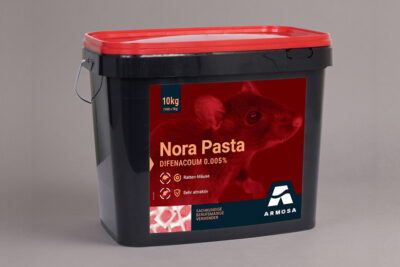
Nora Pasta, Propasta and Problok: where each format works, how to space stations for rats and for mice, why bait goes untouched, and what to expect day by day.
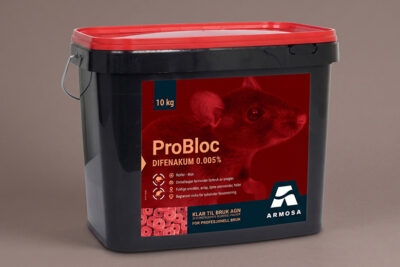
Brodifacoum, difenacoum, bromadiolone, flocoumafen: choosing the active substance
A "stronger" anticoagulant means one that persists longer, not one that kills faster. The four second-generation substances compared, secondary poisoning risk, and why rotation works differently than with insecticides.
Rodents as a reservoir of infection on the farm: 77 pathogens and the real cost
Prevalence of Leptospira, Salmonella, Campylobacter and Toxoplasma in farm rodents, economic losses well beyond the value of eaten feed, and a correction on PRRS that contradicts a common claim.
Anticoagulant resistance in rodents: when it really is resistance and when it is programme error
Differential diagnosis of a failed rodent control programme, VKORC1 mutations and their geography, resistance factors, RRAC guidance and the practices that create resistant populations.
Farm rodent control: why a rodenticide on its own does not work
The four components of a working rodent control programme, station placement based on rat and mouse biology, bait formats and record-keeping. Why chemistry without engineering gives only a temporary result.