
NORA PASTA
- COMPOSITION
- 1 g contains the active substance difenacoum 5 mg. Excipients: denatonium benzoate (bittering agent), wheat flour, lard, fish oil, sorbic acid, flavouring.
- SHELF LIFE AND STORAGE
- 24 months from manufacture. Store in a dry, cool, well-ventilated place in original packaging.
- PACKAGING
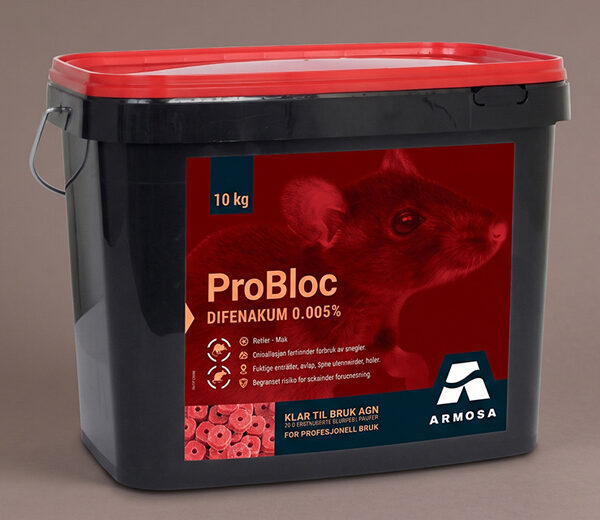
- Plastic buckets of 10 kg containing 10 g sachets.
Specifications
Ready-to-use rodenticide paste, soft red paste. Difenacoum is a second-generation anticoagulant that prevents blood clotting by inhibiting regeneration of active vitamin K1. Clinical signs appear within 18 hours, leading to death within 3-10 days.
Nora Pasta - Rodenticide Bait for Rats and Mice
Nora Pasta is a professional ready-to-use rodenticide bait in the form of a soft red paste for the control of rats and mice on farms, in livestock buildings and at agricultural facilities. Enrichment of the bait with fatty attractants (lard, fish oil) ensures its high palatability to rodents and effective rodent control.
The active ingredient is difenacoum, a second-generation anticoagulant. Manufacturer - ARMOSA SA (Engis, Belgium). In Ukraine it is supplied by WellFarm, the official LANXESS partner.
Composition and Active Ingredient of Nora Pasta
Each 1 g of product contains the active ingredient: difenacoum (difenacoum) - 5 mg. Excipients: bittering agent (denatonium benzoate), wheat flour, lard, fish oil, sorbic acid, flavouring.
The bait components are selected for maximum efficacy and safety:
- Difenacoum - a potent anticoagulant rodenticide, effective after a single feeding.
- Wheat flour, lard and fish oil - fatty attractants that ensure high palatability and acceptance of the bait.
- Denatonium benzoate (bittering agent) - an extremely bitter substance that prevents accidental ingestion of the bait by humans and non-target species.
- Sorbic acid and flavouring - extend bait preservation and enhance its attractiveness.
- Red colour - a warning marker that helps distinguish the bait and monitor its consumption.
Mechanism of Action: Coumarin Anticoagulant
Difenacoum is a second-generation anticoagulant (a 4-hydroxycoumarin derivative). Its mechanism of action involves disrupting blood coagulation in the rodent's body:
- the substance inhibits the enzyme vitamin K epoxide reductase, blocking the regeneration of the active form of vitamin K1;
- vitamin K1 deficiency impairs the hepatic synthesis of vitamin K-dependent clotting factors, resulting in fatal internal haemorrhage.
Clinical signs progress and appear within 18 hours after ingestion of a toxic dose, with death occurring within 3-10 days. The delayed action is a key advantage: rodents do not associate the bait with their deteriorating condition, do not develop bait shyness and continue to feed on it, ensuring the elimination of the entire population.
Target Rodents
The product is used to control:
- the brown (Norway) rat (Rattus norvegicus);
- the black rat (Rattus rattus);
- the house mouse (Mus musculus).
Treatment is carried out at agricultural facilities, on farms and in livestock buildings (piggeries, cowsheds, calf houses, poultry houses, sheepfolds, stables), provided that non-target animals cannot access the placed baits.
Application Rate and Instructions for Use
The bait is placed using protective gloves (to prevent the transfer of "human scent") near likely rodent runs and harbourage. The placed baits are inspected periodically and replenished as needed until they remain uneaten.
| Target rodent | Dose per point | Minimum distance between points |
|---|---|---|
| House mouse (Mus musculus) | 20-30 g | 2 m |
| Rats (Rattus norvegicus, Rattus rattus) | 50-100 g | 5 m |
Safety Precautions
The product is an anticoagulant rodenticide and is toxic to humans and animals. Place the bait only in locations inaccessible to children, pets and non-target animals, using protective gloves. Do not store or place it near food or feed. Dead rodents should be collected and disposed of in accordance with current regulations to prevent secondary poisoning of predators and scavengers. The specific antidote is vitamin K1 (phytomenadione): in case of suspected poisoning, seek medical help immediately and inform the doctor that a coumarin anticoagulant is involved.
Storage Conditions and Shelf Life
Store in a dry, cool, well-ventilated place, in the original packaging. Shelf life - 24 months from the date of manufacture.
Packaging and Where to Buy Nora Pasta
Supplied in plastic buckets of 10 kg containing filter-sachets of 10 g each. You can buy Nora Pasta in Ukraine from WellFarm. Order a professional rodenticide bait for effective rodent control on farms and in livestock buildings.
FAQ
How much Nora Pasta goes into one point?
For house mouse, 20 to 30 g per point with a minimum spacing of 2 metres. For rats, 50 to 100 g per point with 5 metre spacing.
What is the active ingredient and how does it work?
Difenacoum at 5 mg per gram of product, a second-generation anticoagulant. It suppresses the regeneration of the active form of vitamin K and so blocks blood clotting. Clinical signs appear within 18 hours of a toxic dose and death follows in 3 to 10 days.
Why is the bait so palatable to rodents?
The paste is based on wheat flour, lard and fish oil, making it a high-calorie fatty bait that a rodent will take readily even with feed available nearby. That is why a soft paste works where grain and pellets get ignored.
What is the bittering agent for?
Denatonium benzoate is a bitter compound that makes the bait repellent to humans, children above all, without reducing its appeal to rodents. It is a standard safety element in modern rodenticides.
Where should Nora Pasta be used?
In burrows and damp places, where a paste in a sachet wins on palatability and does not soften. It is laid in agricultural premises and on farms, only where it is inaccessible to children and non-target animals, in protective stations and handled with gloves.
What is the shelf life?
Twenty-four months from the date of manufacture. Store in a dry, cool, ventilated place in the original packaging, separately from feed and under lock.

Rodents in winter: why pressure rises and what to do
Why the population moves indoors in autumn, what to do before the cold, the winter constraints people forget, and which bait formats…
Read more →
Who makes our biosecurity products: Antec, SOMVITAL, Armosa
Six European manufacturers behind the WellFarm range: Antec, SOMVITAL, Bioplagen, Armosa, Morpheus and Impex Europa. Who makes what, what belongs on a…
Read more →Choosing a rodenticide bait: paste, sachet or block
Nora Pasta, Propasta and Problok: where each format works, how to space stations for rats and for mice, why bait goes untouched,…
Read more →